Most space heater fires start one of four ways: something that burns sits too close to the heater, the heater tips over, it runs on an extension cord or power strip, or it overheats. If one has happened in your home, restoration means cleaning smoke and soot from rooms the flames never touched, drying the water firefighters left, then rebuilding.
Prevention comes first below, because it keeps you from needing the rest. Recovery is where homeowners in Chesapeake, Virginia Beach and the rest of South Hampton Roads get stuck, because a fire that stayed in one bedroom can leave odor in closets down the hall. We are AmeriTribe, and our fire and smoke damage restoration team handles that recovery under one roof, from the first call to move-in ready.
Space heater fire safety and recovery checklist
Give a space heater 3 feet of clear space, plug it straight into a wall outlet, and turn it off when you leave or sleep; if a fire does happen, follow the bottom rows in order.
| When | Step | Why it matters |
|---|---|---|
| Before | Keep the heater 3 feet from bedding, curtains, furniture and paper | Heat reaching something that can burn is how these fires start |
| Before | Plug it straight into a wall outlet | The CPSC warns against extension cords and power strips |
| Before | Set it on a flat, stable floor | A heater that tips over can ignite what it lands against |
| Before | Turn it off when you leave the room or go to sleep | No one is there to catch a problem early |
| Before | Feel the plug and cord while it runs | A hot plug or cord is a warning sign |
| Before | Look for a UL or similar lab seal and check CPSC recalls | Recalled models carry a known fire hazard |
| After | Get everyone out and call 911 | People first, then property |
| After | Call your insurer and a licensed restoration contractor | Smoke odor and trapped water get harder to fix with time |
What sets off a space heater fire, and when do these fires peak?
Space heater fires start when heat reaches something that can burn, or when the heater, plug or cord overheats, and they cluster in the coldest months. U.S. fire departments answered an estimated 37,365 home heating equipment fires a year from 2020 to 2024, with 417 deaths, 1,260 injuries and $1.2 billion in property damage. Space heaters and heating stoves accounted for 73 percent of those deaths and 70 percent of the injuries, and nearly half of these fires (46 percent) happen from December to February, according to the NFPA's findings on home heating fires.
Portable heaters, including electric space heaters, were involved in an average of 1,700 fires, 70 deaths and 160 injuries a year from 2017 to 2019, according to a CPSC winter heating warning.
When a cold snap hits Norfolk or Suffolk and the portable heater comes out of the closet, these are the four ways it goes wrong:
- Too close to something that burns. Bedding, curtains, a sofa, laundry or a stack of mail within 3 feet of the heater can catch.
- Tip-overs. A heater on a rug edge or cluttered floor can fall against something flammable.
- Extension cords and power strips. Heaters run for hours at a time, and the CPSC says to plug them straight into a wall outlet instead.
- Overheating and inattention. A plug or cord that runs hot, or a heater left running in an empty room or sleeping house, gives a problem time to grow.
Three of the four come down to placement and habit, which you control.
How to prevent a space heater fire this winter
Preventing a space heater fire comes down to space, power and attention: keep 3 feet clear, plug into a wall outlet, and never leave the heater running while you sleep or step out. The CPSC's space heater guidance covers the basics:
- Keep the heater at least 3 feet from anything that can burn, including beds, curtains, furniture and clothing.
- Buy a heater with a seal from UL or a similar independent testing lab.
- Set it on a flat, stable surface where it will not get knocked over.
- Plug it directly into a wall outlet, never an extension cord or power strip.
- Turn it off when you leave the room or go to bed.
- Touch the plug and cord after it has run a while. If either is hot, unplug it and stop using it.
Then check whether your model has been recalled by searching the CPSC recall list for your heater's brand and model. A current example is the DREO DR-HSH015 ceramic space heater recall, announced October 29, 2026, which covers units made April 2025 through January 2026. The CPSC lists 17 reports of the heaters igniting, 3 with property damage, and tells owners to stop using them and contact DREO for a free replacement.
If the heater came from a relative or a yard sale in Portsmouth, check it the same way before you plug it in.
A space heater fire just happened: what should you do in the first 24 hours?
Get everyone out, let the fire department clear the house, then call your insurer and a restoration contractor before you clean anything yourself.
- Stay out until you are cleared. Even after the flames are out, the fire department decides when it is safe to go back in.
- Call your insurance company. Opening the claim early gets an adjuster scheduled. Most of the families we help are filing for the first time.
- Call a licensed restoration contractor. Our emergency response runs 24/7, so a fire at 2 a.m. does not have to wait for the office to open.
- Take photos before moving anything: wide shots of each room, close-ups of damaged items, and the heater itself.
- Keep the heater. Your adjuster may want to see it, and you will want the model number to check it against the recall list.
- Leave the soot alone. Wiping it with a household cleaner can smear it deeper into paint and fabric.
- Hold off on the heating system. Running it can push soot through the ducts into rooms the fire never reached.
- Plan where you will sleep. If the house is not livable, we help you work out a hotel or short-term rental with your adjuster.
Why does a small heater fire leave smoke and water damage across the house?
A fire that burns one corner of a bedroom still sends smoke and soot through the house, and the water used to put it out soaks into the floors and walls around it.
Smoke travels with the air. It moves down hallways, under doors, through return vents and into closets, then settles as soot on walls, ceilings and windows. Porous materials such as drywall, insulation, carpet, upholstery and clothing hold the odor inside them, which is why wiping the surface can leave the smell behind.
Where damage tends to hide after a space heater fire:
- A thin soot film on walls and ceilings in the rooms next to the fire
- Odor inside wall cavities, insulation and the framing studs
- Soot inside HVAC ducts and return vents
- Smoke in clothing, bedding and soft furniture in nearby rooms and closets
- Water in carpet pad, subfloor, the bottom of drywall and any ceiling below the fire
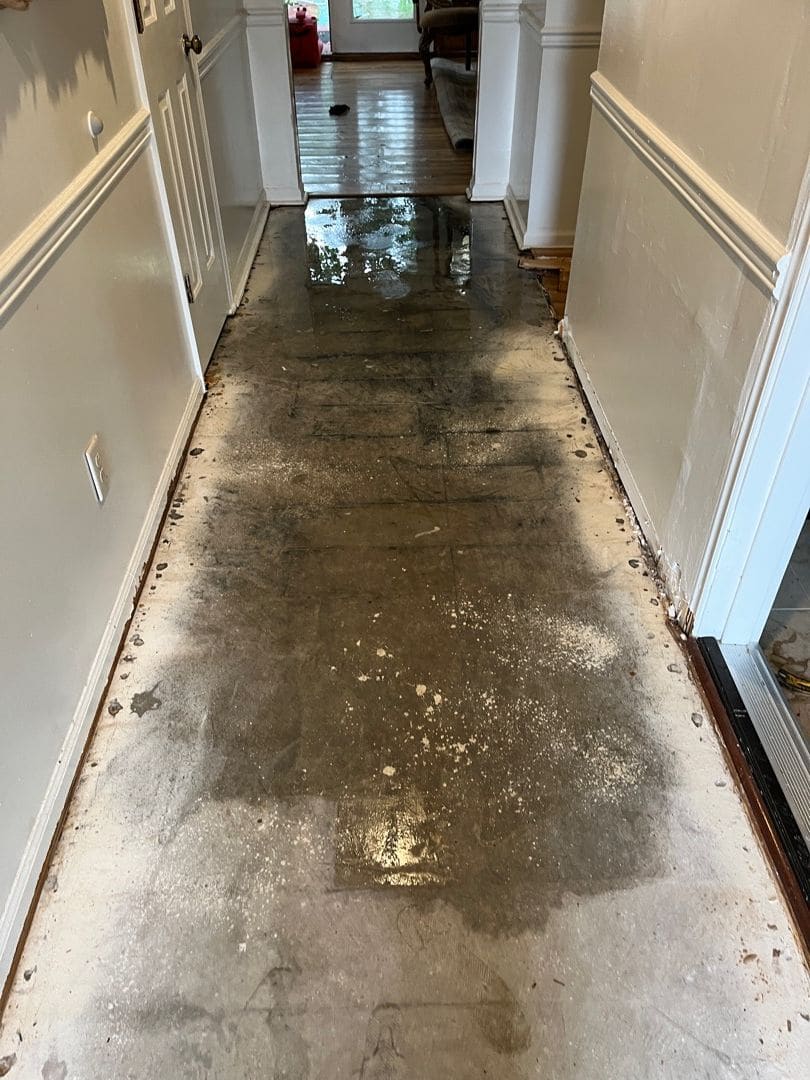
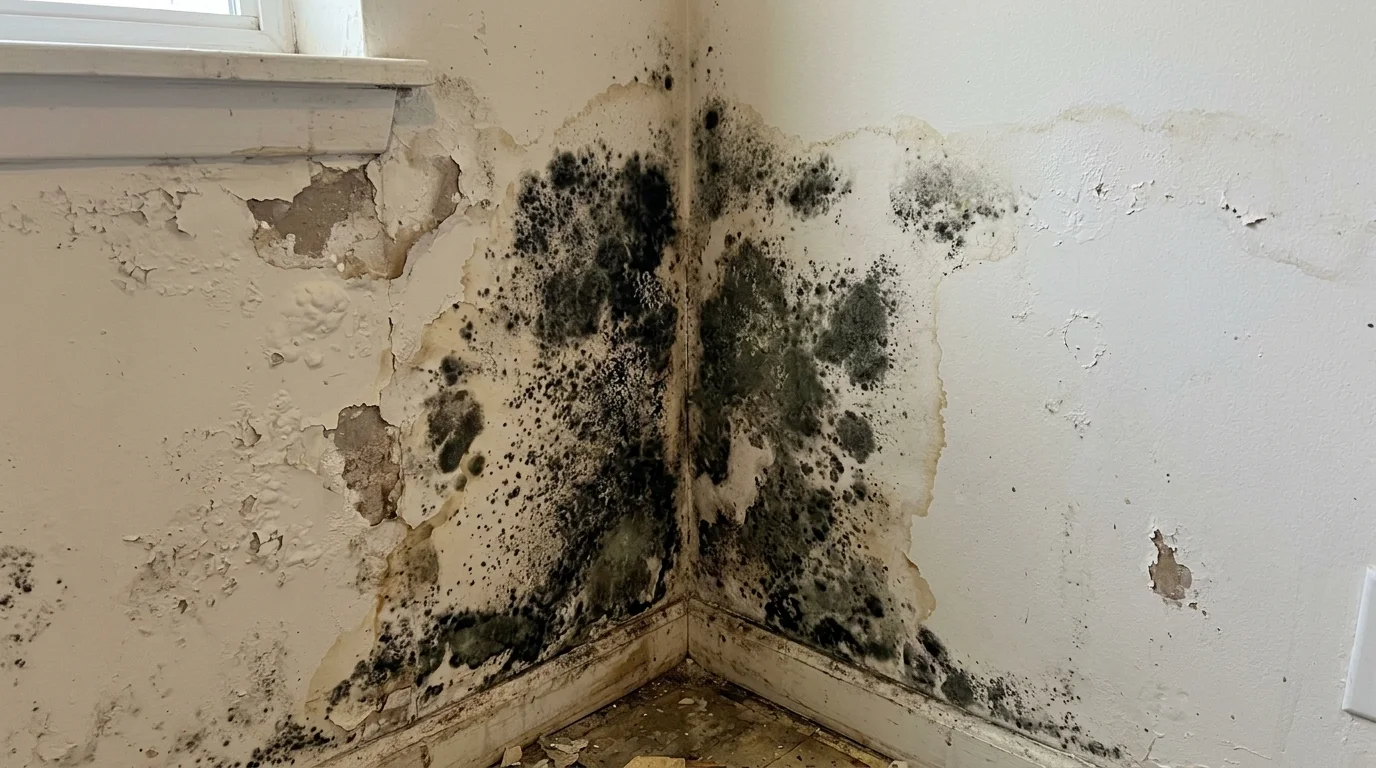
Firefighters put water on the fire, and even a quick knockdown can leave carpet, subfloor and drywall soaked. In a humid place like South Hampton Roads, wet drywall and insulation left in place give mold a start, so extraction and drying cannot wait until the smoke cleanup is done. If mold does appear, we always have testing done by an independent third party, so the results stand on their own with your adjuster.
From assessment to rebuild: how the restoration sequence works
Restoration after a space heater fire runs in order: assess the structure, protect your belongings, dry out the water, remove what cannot be saved, clean and deodorize what can, then rebuild.
- Structural assessment. We walk the house to see what burned, where the smoke traveled and where the water went.
- Contents packout. Belongings come out so they can be cleaned and the crew can work. We manage packouts with a dedicated packout partner.
- Water extraction and structural drying. Standing water comes out, then dehumidification dries the framing and subfloor.
- Tear-out. Where smoke has soaked into walls, they come down to the studs. In a home built before 1980, insulation or floor tiles may need asbestos testing first; we test suspect materials and hold a Virginia asbestos license, so the job does not stall.
- Stud cleaning. Exposed framing gets a specialized cleaning that runs about six hours, so the odor is removed at the source instead of sealed behind new drywall.
- Deodorization. An aerosol fogging treatment reaches deep smoke odor that cleaning alone cannot.
- Rebuild. Insulation, drywall, paint, flooring and finish work, managed under our Class A license instead of handed to a second contractor.
Belongings are worth a second look before they go. Clothing, paintings and furniture can often be restored unless fire foam or toxic exposure has ruined them. Ask before you throw anything out, because once it is in the dumpster, no one can assess it.
How do you handle the insurance claim if this is your first one?
You do not have to handle it alone: we guide first-time claimants through the adjuster visit, the deductible, temporary housing and the rebuild choices.
Most people who call us after a fire have never filed a property claim, and they are overwhelmed. Here is where we step in:
- Meeting your adjuster and showing what burned, where smoke traveled and where water went
- Writing the estimate in Xactimate, the software we use for insurance estimates
- Helping you find out what your policy covers, including any asbestos or mold work found once the walls are open
- Working through temporary housing, a hotel or short-term rental, while the work is done
- Rebuild choices, such as matching continuous flooring across rooms instead of patching where the damage stopped
Putting it off has a cost. Smoke odor in framing and insulation does not leave by itself, and wet materials give mold time to start. The sooner the cleanup begins, the smaller it tends to stay.
Why hire one licensed Class A contractor instead of a handoff between companies?
One contractor holding every license the job needs means nobody stops halfway and tells you to find someone else.
Some restoration companies dry the structure and open the walls, then tell the homeowner to hire another company for the asbestos or the mold. That leaves you acting as your own general contractor during an already hard week. We finish the job. Hiring a licensed and insured contractor also protects you from operators who take a deposit and disappear. What stands behind that:
- Virginia Class A Contractor, DPOR license 2705142434, with asbestos, commercial building and residential building classifications. Class A is Virginia's highest contractor license tier, with no limit on the size of a single project.
- Virginia Asbestos Contractor License, DPOR 3306001176, from the Board for Asbestos, Lead, and Home Inspectors. Each of our asbestos workers also holds an individual license, renewed every year.
- Licensed and insured, with commercial general liability, pollution liability, professional liability, commercial auto, umbrella and workers' compensation coverage.
- Since 2010, a Native American-owned, family-run company with a core team of 11, based on Ventures Way in Chesapeake.
- Serving South Hampton Roads: Chesapeake, Virginia Beach, Norfolk, Portsmouth and Suffolk.
Before you hire any restoration company, including us, check the contractor license, ask for the certificate of insurance and ask for references. Both of our license numbers can be looked up through Virginia's Department of Professional and Occupational Regulation.
Call for space heater fire damage restoration in Chesapeake and South Hampton Roads
If a space heater fire has damaged your home in Chesapeake, Virginia Beach, Norfolk, Portsmouth or Suffolk, call us at (757) 520-5190. Emergency response is available 24/7. Our office hours are 9:00 AM to 4:00 PM, and an emergency call does not wait for them.
When you call, you reach someone who takes charge. We will:
- Talk through what happened and whether anyone needs somewhere else to sleep tonight
- Schedule a structural assessment of the fire, smoke and water damage
- Help you open your claim and find out what your policy covers
- Lay out the plan for your belongings, the tear-out and the rebuild, under one roof