Mold remediation in Virginia Beach works when it does three things: it removes the mold under containment, fixes the moisture that fed it, and puts the room back together. Testing should come from an independent firm your insurance adjuster will trust, and one company should carry the job from the first leak to the finished room.
That is simple to say and harder to get. The patch you can see is usually part of a larger colony behind the wall. The company drying your house may stop when it finds mold. A first insurance claim can feel like a second disaster.
AmeriTribe is a family-run restoration contractor based in Chesapeake, serving Virginia Beach and the rest of South Hampton Roads. Our mold remediation services sit alongside water damage drying and the rebuild under one roof, so you make one call and we take it from there.
The short version, at a glance
Stop the water, leave the mold alone, use an independent test if insurance is involved, and keep one company on the job through the rebuild.
| Your situation | What to do first | What it takes |
|---|---|---|
| Water from a burst pipe, storm or roof leak | Stop the water if you can do it safely, then dry the structure, not just the floor | Extraction, structural drying, dehumidification, and a plumber if none is coming |
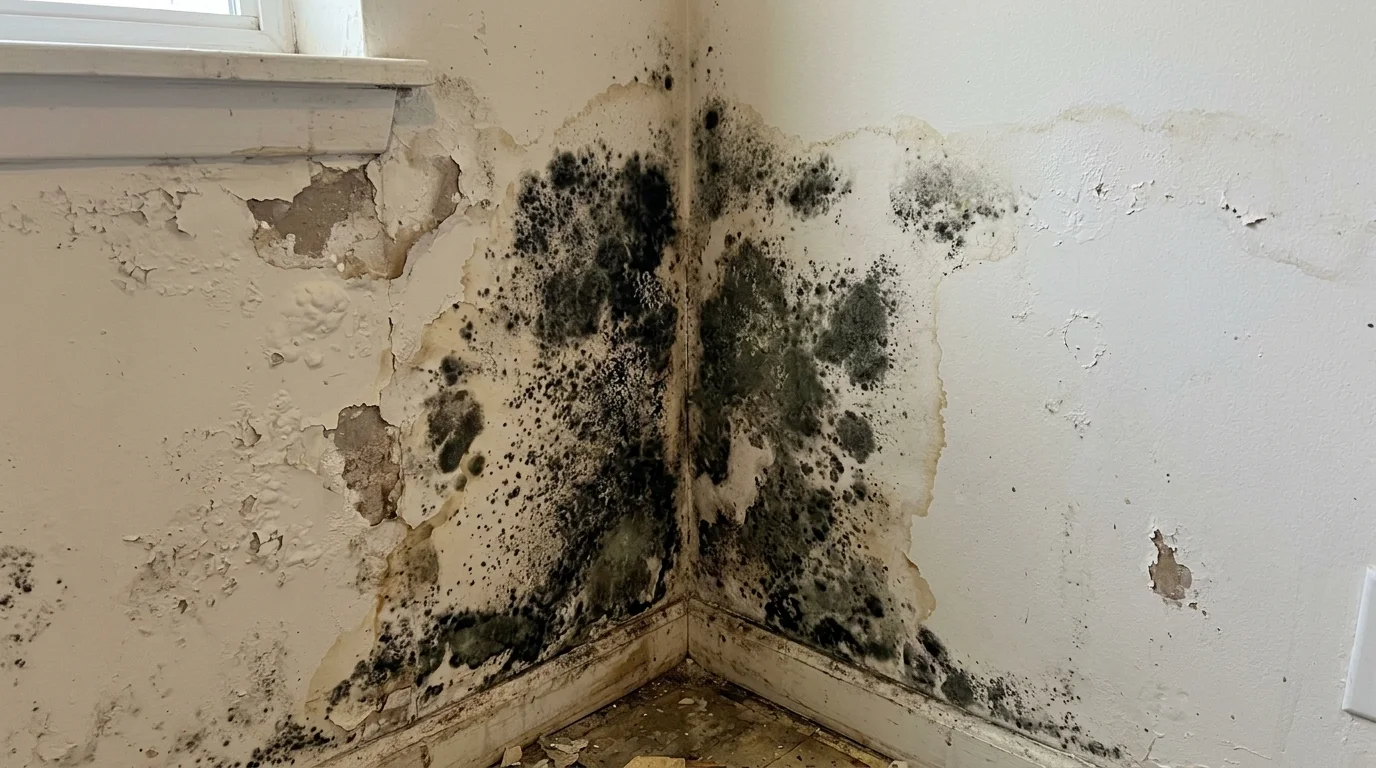
| A small patch of visible mold | Do not scrub, spray or paint it: it usually means a larger colony behind the wall | Inspection, containment and removal |
| A mold test for an insurance claim | Use an independent third party so the results stand up with your adjuster | An outside testing firm, not the company doing the removal |
| Your first insurance claim | Find out what your policy covers before work starts | Guidance on adjusters, deductibles and temporary housing |
| A pre-1980 home with walls coming open | Have suspect materials tested for asbestos before more comes out | Testing and abatement by a licensed Virginia asbestos contractor |
| Walls and floors torn out | Rebuild to match, including continuous flooring | A Class A contractor that rebuilds what remediation removed |
Why does mold keep showing up after water damage in Virginia Beach homes?
Mold keeps showing up because water soaks into drywall, insulation and framing and stays there after the floor looks dry. Mopping and running a fan dry the surface. They do not dry the wall cavity, the subfloor or the insulation behind the baseboard, and that hidden moisture is where mold takes hold.
The water behind most of the jobs we see comes from three places:
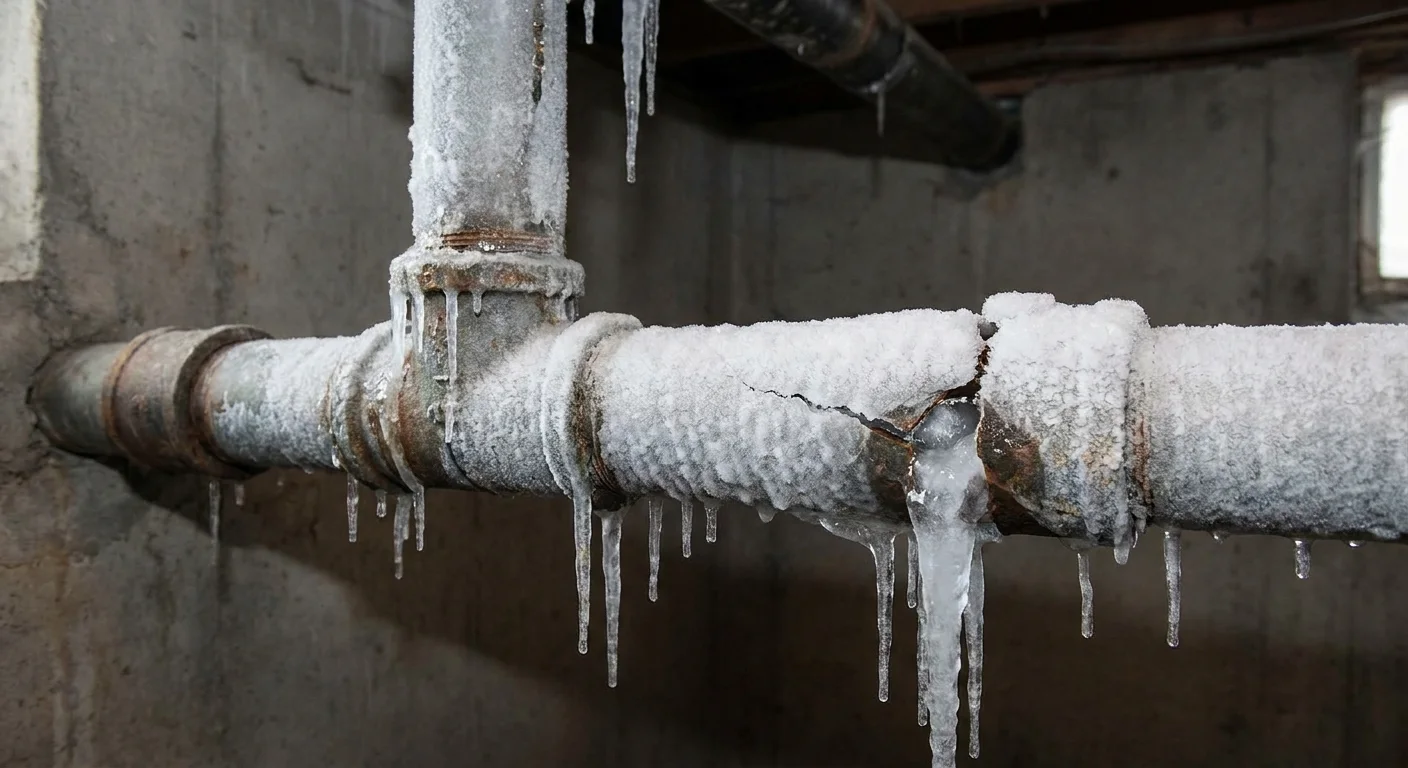
- Burst pipes. A pipe that splits during a cold snap can run inside a wall or ceiling before anyone notices. If it is happening now, start with our guide on what to do in the first hour after a pipe bursts.
- Severe storms. Nor'easters and summer storms drive rain through windows, doors, siding and flashing.
- Roof leaks. A slow leak drips into attic insulation and ceiling drywall long before a stain shows below.
Virginia Beach sits between the Atlantic and the Chesapeake Bay, and in that damp coastal air a wet wall cavity rarely dries out on its own.
That is why water damage restoration starts with extraction, structural drying and dehumidification, not a mop and a box fan. Drying the structure, not just the surface, keeps a water problem from becoming a mold problem.
Why a small patch is rarely small, and why bleach or paint makes it worse
A patch of mold you can see usually means a larger colony behind the surface, and bleach, store sprays or a coat of paint only reach the part you can see.
You spot a gray patch near a bathroom baseboard, scrub it, and it looks gone. But that mold was growing out of damp material, and the moisture and the colony inside it are still there. The usual fixes go wrong in three ways:
- Store chemicals clean the surface. They do not reach mold growing inside damp drywall or wood, so the colony keeps spreading where you cannot see it.
- Paint seals the problem in. Painting over damp drywall without fixing the moisture source lets mold grow underneath until the paint bubbles.
- Time works against you. Each round of cleaning and repainting gives the colony longer to grow, and the area that eventually has to come out gets larger.
Instead, leave the patch alone, take photos, note when you first saw it, and look for the water: a ceiling stain, a soft spot in the floor, a leak under a sink. Then have it looked at by someone who will open the wall if needed and trace the moisture to its source.
Do I need a mold test, and who should do it?
If an insurance claim is involved, a test is worth having, and it should come from an independent firm rather than the company that will remove the mold.
A company that tests for mold and then gets paid to remove it is grading its own work. Results from a firm with no stake in the removal carry more weight with an adjuster. That is why we never test for mold ourselves: on our jobs, testing is always done by an independent third party, on purpose.
If you are looking for mold testing in Virginia Beach, here is what an independent test gives you:
- A record of the mold from someone with nothing to sell you afterward
- Results you can hand your adjuster along with your claim
- A starting point for planning the remediation before anything is torn out
For mold, be careful with any company that offers to test and remove for one price. That arrangement puts the diagnosis and the invoice in the same hands.
What happens when the water damage company finds mold and stops working?
With many restoration companies, the crew dries the house and opens the walls, then tells you to hire someone else for the mold, asbestos or sewage, and you become your own general contractor.
For a Virginia Beach homeowner going through this for the first time, that hand-off is where the job stalls: open walls, no drying equipment, and you calling around for a mold company, an asbestos contractor and later a builder.
We work differently. As a Virginia Class A contractor, we carry the job from mitigation through the rebuild. You call us, and you do not have to call anybody else. Here is what stays with one company:
- Water extraction, structural drying and dehumidification
- Mold inspection, containment, removal and prevention
- Asbestos testing and abatement if suspect materials turn up
- A plumber, which we get out to you if none is on the way
- The rebuild, from walls and floors to bathroom remodels and roof replacement
If a burst pipe caused the damage and no plumber is on the way, we get one out to you.
Asbestos is usually found in homes built before 1980, in materials like insulation, transite siding and roofing, and opening walls can expose it. We hold a Virginia asbestos contractor license, test suspect materials, and remove them under sealed containment, so finding asbestos does not mean starting over with a new company.
What mold remediation in Virginia Beach looks like, step by step
Remediation follows a set order: inspect, contain, remove, dry, fix the moisture source, and only then rebuild.
- Inspection. We look at the visible mold, trace the water back to its source, and work out how far the damage reaches behind walls, under floors or in the attic.
- Independent testing. When a claim is involved, an outside firm does the testing so the results stand on their own.
- Containment. We seal off the work area so the removal stays in the affected part of the house.
- Removal. Mold-damaged material comes out. Because visible mold usually means more behind the surface, this often means opening the wall.
- Drying. Structural drying and dehumidification bring the framing and subfloor back to dry before anything is closed up.
- Prevention. The moisture source gets fixed, so the mold has no water to come back to.
How we close off the source depends on where the water came from. If a pipe burst, we get a plumber out if one is not already on the way. If the roof leaked, roof replacement is part of what we do. If storm water came in around a window or door, we find where it entered during the inspection so the rebuild does not leave that path open.
Putting the room back together: rebuild after remediation
Once the area is clean and dry, we handle the rebuild too, so you are not left with an open wall and a search for a contractor.
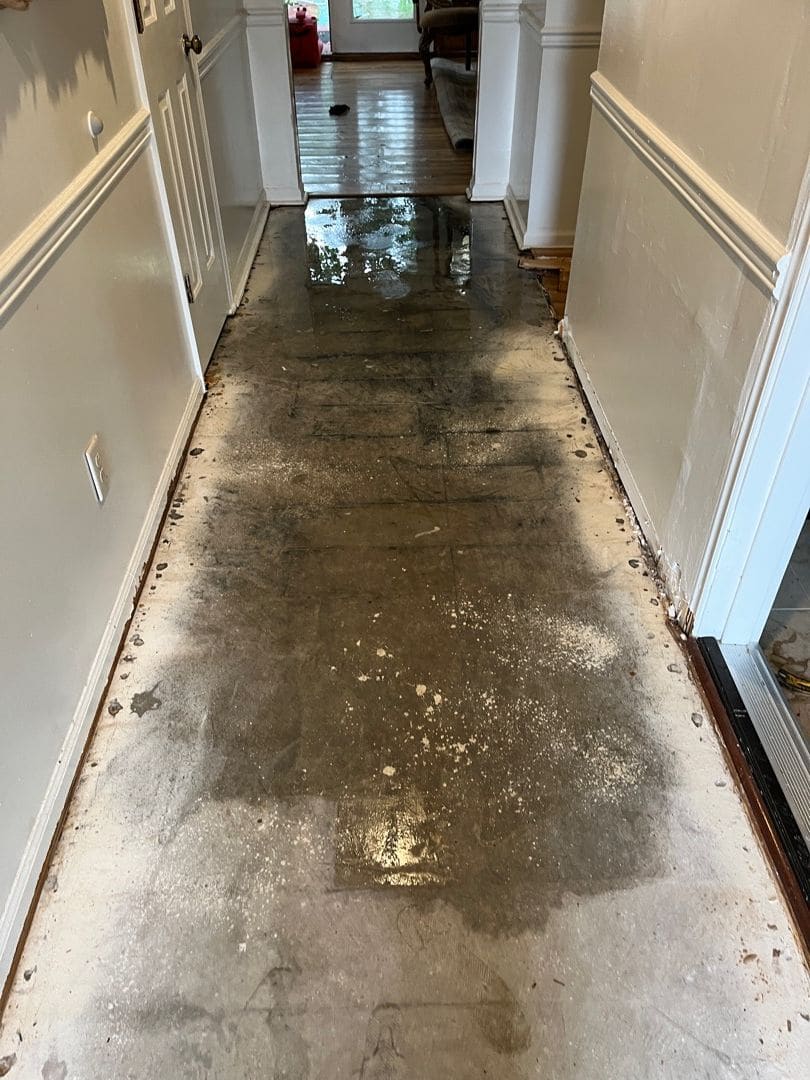
Remediation can leave a bathroom without drywall, a hallway without flooring, or a ceiling open to the attic. Our Virginia Class A license is the state's highest contractor license tier, with no limit on the size of a single project, which is what lets one company take a room from bare studs to finished. The rebuild can include:
- Walls and ceilings closed up and finished
- New flooring, matched across connected rooms rather than patched in one
- A bathroom remodel when the water or mold started in the bathroom
- Roof replacement when the roof caused the leak
- A larger home remodel when the damage reaches several rooms
Matching continuous flooring shows where guidance helps. If one floor runs through a kitchen, hallway and living room, patching only the damaged section can leave a visible seam. We advise you on rebuild choices like this one, where an insurer might otherwise cut corners, so the finished room fits the rest of your home.
Will my insurance pay for mold remediation in Virginia Beach?
That depends on your policy, so the first step is finding out what yours covers for mold, and we help you do that before work starts.
We will not promise that any policy will pay. What we can do is guide you through the claim. Most people who call us are filing one for the first time, so we help with:
- Working with your adjuster and understanding your deductible
- Finding out what your policy says about mold and asbestos work
- Temporary housing, such as a hotel or short-term rental, if you need to leave the house during the work
- Independent test results that stand up with your adjuster
- Rebuild choices such as matching continuous flooring
Waiting has its own cost. Mold behind paint or inside a damp wall keeps growing, and the area that has to come out gets larger. Whatever your policy says, a smaller job is easier on your home and your budget.
How to check a mold remediation company before you hire one
Before you hire anyone, check the contractor license, ask for the certificate of insurance, and ask for references.
Those three checks protect you from fly-by-night operators who take a deposit and disappear, the last thing you need with your house already torn open. Hold us to the same standard. Here is what you will find when you check AmeriTribe:
- Virginia Class A Contractor, DPOR license 2705142434, with asbestos, commercial building and residential building classifications. Class A is Virginia's highest contractor license tier, with no limit on the size of a single project.
- Virginia Asbestos Contractor License, DPOR 3306001176, from the Board for Asbestos, Lead, and Home Inspectors. Each worker also holds an individual asbestos license, renewed every year.
- Licensed and insured, with commercial general liability, pollution liability, professional liability, commercial auto, umbrella and workers' compensation coverage.
- In business since 2010, Native American-owned and family-run, with a core team of 11 and an office in Chesapeake.
- Mold testing always done by an independent third party, never by us.
- Sponsors of local youth sports teams, including wrestling and baseball.
You can look up both licenses on the Virginia DPOR website at dpor.virginia.gov. Ask every company you are considering for references, us included. To learn more about who we are, read about our family-run team.
What to do today if you find mold or water damage in your Virginia Beach home
Stop the water if you can do it safely, leave the mold alone, take photos, and call us at (757) 520-5190.
When you call, someone takes charge. We come out, look at the water and the mold, tell you what needs to happen first, and get a plumber out if none is on the way. We explain how independent testing and your insurance claim fit in, so you know the next step instead of guessing.
Emergency response is available 24/7. Our office in Chesapeake is open 9:00 AM to 4:00 PM.
Call AmeriTribe at (757) 520-5190.
Here are short answers to the questions that come up most when a Virginia Beach home has water or mold damage.